
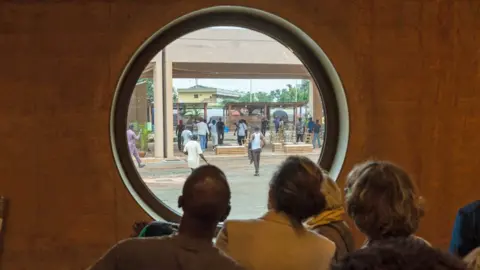
The nation's stunning new Museum of West African Art (Mowaa) has found itself in the crosshairs of area political conflicts during the period it was supposed to – but failed – to welcome visitors to the visitors for the very first time.
The Grand Vision
The 15-acre complex is located in the heart of the Edo state capital, administrative center of the southern region of Edo – and contains an archaeological dig and facilities planned by high-profile dual heritage architect Sir David Adjaye, best known for the National Museum of African American History and Culture that opened in Washington DC in 2016.
It has been five years in the creation – and is designed to honor both the past and the current era of creativity in the area renowned for the cultural artifacts, cultural objects taken from the king's palace by British troops in the nineteenth century.
Preparation and Promise
It is remarkable – and before the planned opening, Mowaa was energetic with employees resolved to prove it is a place that can rival well-known cultural centers in the West.
Inside preservation experts precisely opened artworks from secure wrapping, inspecting each artifact and taking thorough notes before positioning them on walls and plinths.
Experts adjusted climate control systems. In the research lab, staff members set up equipment designed to maintain historical objects.
Investment and Economic Plans
The project has been the brainchild of businessman Phillip Ihenacho – now Mowaa's chief executive.
"I hope us to have a substantial economic impact on local residents in the vicinity," he stated to journalists, mentioning that he wanted to make this urban center "a cultural destination."
Mowaa, a charitable Nigerian institution, aims at generating over 30,000 employment opportunities and providing above $80m each year to the regional creative economy through collaborations and activities.
Investment and Administrative Problems
It has needed $25m to get here – money collected from different supporters, featuring the French and German governments, the London institution and the regional authorities.
But at present the state authorities has pulled the rug from under it – revoking the utilization of the property on which the facility was constructed.
An official representative explained this was because in the original paperwork it had identified as Edo Museum of West African Art – and it had later dropped "the regional name" from its name.
Unrest and Official Response
This declaration came after rallies on the weekend, when activists invaded the facility insisting it be called the Royal Benin Museum.
A disruptive assembly insulted international visitors at the museum before the inauguration – compelling them to be hurried away under police escort.
President Bola Tinubu has additionally intervened to work to address the conflict, creating a presidential committee to do some damage control.
Governance Issues
But why has this become so controversial – and such a reputation problem?
The majority of it comes down to local power struggles at a regional government level, as it was the ex-administrator Godwin Obaseki – whose governance finished the previous year – who was a key supporter of the initiative.
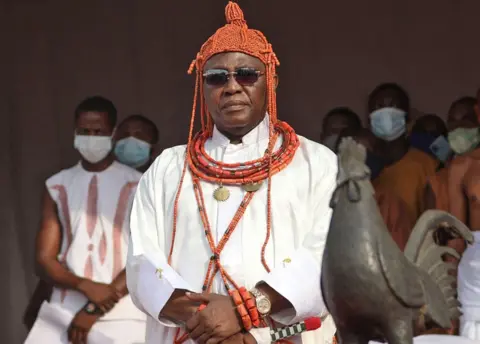
And it seems the leadership of the current leader, a close ally of the area king, known as the Oba, may seek greater involvement in the initiative. The demonstrators on that day, for example, were insisting that the institution be placed under the control of the current Oba.
The Cultural Artifacts Debate
This emphasizes the disputed topic of the historical artworks, one of the continent's most celebrated cultural treasures.
Because even if the institution does ultimately welcome visitors, these objects will be clearly not present.
They are metal, elephant tusk and timber artworks that once adorned the royal palace of the historical empire before UK forces stole them in the colonial era during a colonial invasion.
Currently, thousands remain spread across institutions in Western nations -- featuring the London museum, Berlin's Humboldt Forum and the New York institution.
Repatriation Campaigns
Their return has become one of the most contested debates in the worldwide cultural sector. Roughly 150 have currently made their way home – and additional are scheduled to be repatriated.
When plans for the facility in Benin City were first announced in 2019, the movers and shakers on Nigeria's art scene expected it would become their perfect venue – a modern facility to show them off to the world.
But the issues became confused recently after the federal government stated that the royal leader would be the proper guardian of returned objects – and the palace advocated for a museum under the king's authority, against the preferences of the ex-leader.
Strategic Positioning
This placed Mowaa in a challenging circumstance: asserting a definite position on return while remaining diplomatic on ownership – and stressing its wider mission, which led to|c


